
Note: This article, by Dr. Sandra Wartski, Psy.D, was originally published in Psychology Today.
Key Points:
Natural environments can provide healing, restore focus, and improve well-being.
Humans have valued nature's importance for health and well-being for centuries in a variety of ancient traditions, but empirical research supporting its psychological and physiological benefits has only emerged in recent decades.
While we know that the natural world offers us opportunities for beautiful scenery and possible vacation destinations, the notion of nature as scientifically proven to be healing and restorative is less well known.
Room with a View
The landmark study demonstrating the connection between exposure to nature and health recovery was led by Dr. Roger Ulrich in 1984 - 1. He found that patients in a hospital recovering from surgery did better if they had a window overlooking green space. The patients whose window faced a brick wall used more pain medication, had longer hospital stays, and had more negative interactions with nurses during the recovery process. This was an amazing discovery.

Source: Sandra Wartski
Around that same time in the early 1980s, the concept of Forest Bathing (“shinrin-yoku”) was being introduced in Japan; however, the scientific research to support its benefits did not emerge until the early 2000’s - 2. The studies exploring the benefits of being in nature have continued to be varied, interesting, and expansive – and all continue to support the power of nature.
A Flood of Findings
Since the early 1980s, hundreds of studies have been conducted around the world, and they continue to support the basic conclusion that nature is good for us. Some of the research is correlational (observing patterns between variables that naturally exist), while other research is experimental (variables are controlled, allowing more conclusions about cause-and-effect). There are pros and cons to both approaches, but the results continue to show the value of spending time outdoors for our mental and physical health.

Source: Sandra Wartski
Creativity and ingenuity abound in the nature research, with scientists utilizing a variety of measures, from surveys to spit, blood to behaviors, heart rate monitors to headsets (such as a mobile Electroencephalography or EEG headset to measure brainwave activity). Results consistently support the natural world as providing opportunities for regeneration, resilience, renewal, and repair-3.
Many Downstream Benefits
As the research on the benefits of connecting with nature expands, it becomes increasingly difficult to adequately capture all of the advantages; however, offered here are three examples in the domains of physical, psychological, and cognitive.
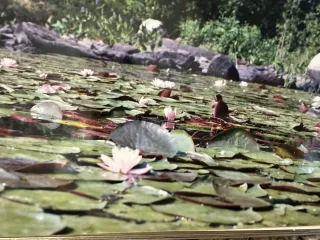
The impact of nature on physical health was one of the earliest domains to be studied. Physical health benefits often include decreased blood pressure, lower heart rate, reduced adrenaline, increased parasympathetic/relaxation system activation, and improved immune function. Dr. Qing Li led one study highlighting this benefit - 4. His team tracked healthy adults during a 3-day, 2-night trip to a Japanese forest. They collected blood and urine samples before, during, and after the trip to investigate molecular and immunological changes that occur in the human body during forest immersion. They found a 50% surge in immune protection, along with a spike in an anti-cancer protein. Just as amazing was the finding that the enhanced immune boost lasted for more than 30 days after returning to city life.
Source: Sandra Wartski
The benefits of nature on psychological health include increased mood, decreased anxiety, lower stress, and higher joy. A research example that masterfully highlighted the joy factor was led by Drs. MacKerron & Mourato, - 5 who had 20,000 subjects utilize the Mappiness Smartphone App, which randomly pinged them throughout the day to ask several questions and track their exact GPS coordinates. Findings showed that subjects were significantly happier when they were outdoors in any natural area. This “happiness boost” was significant even after controlling for what the person was doing, who they were with, current weather, and time of day.
The research on nature positively impacting cognitive functioning includes findings of improved performance, increased creativity, enhanced performance speed, and better attentional abilities. One research example by Dr. Lee - 6 and colleagues studied 150 students who were asked to engage in a dull, attention-draining computer task. Halfway through, participants were given a brief 40-second break; half of the group was asked to look at a digital image of a bare concrete city rooftop while the other half was asked to look at a digital image of a city rooftop covered in a flowering meadow. The group that looked at the flowering nature scene made significantly fewer mistakes and were found to show much more consistent alertness for the second half of the task.
There Is a Web of Multifaceted Causal Theories
The specific mechanism of how nature helps in such a powerful way is still unclear, but there are several hypotheses of what is at the root of the benefits-7, including the positive impact of multisensory input, smells (such as phytoncides), sights (such as fractals), good bacteria in the soil, reconnection to our biophilic ancestors, or the tendency to engage in more movement in nature.

Source: Michael Podger/Unsplas
There are two primary foundational causal theories: ART and SRT. Attention Restoration Theory (ART) - 8 posits that spending time in nature replenishes cognitive resources depleted by sustained mental focus and that soft, effortless focus assists in the attention fatigue of our modern environments. Stress Reduction Theory (SRT - 9 proposes that humans experience positive affective responses and parasympathetic nervous system activation during most types of nature contact. As with so many theories offered in science, there is assumed overlap and bidirectional influence on all of these benefits.
The Nature Prescription
Being in nature and getting more “Vitamin N” (coined by Richard Louv - 10) is invaluable for our self-care and healthcare. Finding ways to connect to the natural world is especially important given our increasingly urban, indoors, digital-focused population in the modern age, with current estimates suggesting that over 90% of Americans spend their time indoors and children spend 50% less time outdoors than previous generations - 11.
Source: Sandra Wartski
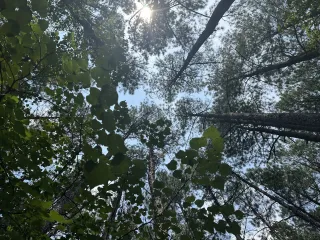
When approaching nature, it is recommended that individuals seek out local settings while pursuing variation whenever possible. Being mindfully focused on the senses is recommended as a means of being more fully present. A hurried dash to one’s car doesn’t quite count, nor does a cell phone-focused shuffle to the mailbox. Going big and going small are also recommended as a means of looking for the large, vast, and awe-inspiring (a tall tree, waterfall, mountains) as well as the beautiful complexities of the micro-vast (an ant hill, a blooming flower, moss on a stone). Major movement is not required; presence and noticing are.
And even if getting outside is not possible for certain people or on certain days, the benefits of vicarious or indirect exposure to nature are well established. Looking out the window at nature, watching nature shows, playing bird songs, or having a potted plant inside have been found to have psychological and physiological benefits as well - 12.

Source: Mark Wartski/Used with permission
Recommended amounts of time in nature vary, but research suggests that spending at least 120 minutes per week in nature is associated with better health and well-being - 13. This can be spread across the week in small increments or done all at once when time allows.
In summary: get out.
References
1 Ulrich, R. S. (1984). View through a window may influence recovery from surgery. Science, 224(4647), 420–421.
2 Li, Q. (2018). Forest bathing: How trees can help you find health and happiness. Viking; Miyazaki, Y. (2018). Shinrin-yoku: The Japanese art of forest bathing. Timber Press; Park, B. J., Tsunetsugu, Y., Kasetani, T., Kagawa, T., & Miyazaki, Y. (2010). The physiological effects of Shinrin-yoku (taking in the forest atmosphere or forest bathing): Evidence from field experiments in 24 forests across Japan. Environmental Health and Preventive Medicine, 15, 18–26.
3 Louv, R. (2011). The nature principle: Human restoration and the end of nature-deficit disorder. Algonquin Books; Selhub, E., & Logan, A. (2012). Your brain on nature: The science of nature’s influence on your health, happiness and vitality. Wiley; Williams, F. (2017). The nature fix: Why nature makes us happier, healthier, and more creative. W. W. Norton & Company.
4 Li, Q. (2010). Effect of forest bathing trips on human immune function. Environmental Health and Preventive Medicine, 15(1), 9–17.
5 MacKerron, G., & Mourato, S. (2013). Happiness is greater in natural environments. Global Environmental Change, 23(5), 992–1000.
6 Lee, K. E., Williams, K. J., Sargent, L. D., Williams, N. S., & Johnson, K. A. (2015). 40-second green roof views sustain attention: The role of micro-breaks in attention restoration. Journal of Environmental Psychology, 42, 182–189.
7 Duran, A. T., Friel, C. P., Serafini, M. A., Ensari, I., Cheung, Y. K., & Diaz, K. M. (2023). Breaking up prolonged sitting to improve cardiometabolic risk: Dose-response analysis of a randomized crossover trial. Medicine & Science in Sports & Exercise, 55(5), 847–855; Lowry, C. A., Hollis, J. H., de Vries, A., Pan, B., Brunet, L. R., Hunt, J. R. F., Paton, J. F. R., van de Kar, L. D., Lowry, D. E., Lightman, S. L., & Rook, G. A. W. (2007). Identification of an immune-responsive mesolimbocortical serotonergic system: Application to antidepressant-like effects of Mycobacterium vaccae. Neuroscience, 146(2), 756–772; Stellar, J. E., John-Henderson, N., Anderson, C. L., Gordon, A. M., McNeil, G. D., & Keltner, D. (2015). Positive affect and markers of inflammation: Discrete positive emotions predict lower levels of inflammatory cytokines. Emotion, 15(2), 129–133; Taylor, R. P., Spehar, B., Wise, J. A., Clifford, C. W., Smith, C. M., & Sereno, M. E. (2011). Perceptual and physiological responses to Jackson Pollock's fractals. Frontiers in Human Neuroscience, 5, Article 60.
8 Kaplan, R., & Kaplan, S. (1989). The experience of nature: A psychological perspective. Cambridge University Press.
9 Ulrich, R. S., Simons, R. F., Losito, B. D., Fiorito, E., Miles, M. A., & Zelson, M. (1991). Stress recovery during exposure to natural and urban environments. Journal of Environmental Psychology, 11(3), 201-230
10 Louv, R. (2016). Vitamin N: The essential guide to a nature-rich life. Algonquin Books.
11 La Puma, J. (2026). Indoor epidemic: 93% inside steals sleep, focus & years—The 7% outdoor Rx restores them. Wellness Imprints; Zomorodi, M., & Diaz, K. (2026). Body electric: The hidden health costs of the digital age and new science to reclaim your well-being. Flatiron Books.
12 Li, D., & Sullivan, W. C. (2016). Impact of views to school landscapes on recovery from stress and mental fatigue. Landscape and Urban Planning, 148, 149–158; Nieuwenhuis, M., Postmes, T., Knight, C., & Haslam, S. A. (2014). The relative benefits of green versus lean office space: Three field experiments. Journal of Experimental Psychology: Applied, 20(3), 199–214; Soga, M., & Gaston, K. J. (2025). Health benefits of viewing nature through windows: A meta-analysis. BioScience, 75(8), 628–636; Wolf, L. J., Sadashige, K., & Gaston, K. J. (2022). Psychological benefits of species richness: Viewing videos of more diverse tree and bird communities reduces anxiety and increases positive affect. Journal of Psychopathology and Clinical Science, 131(6), 654–665.
13 White, M. P., Alcock, I., Grellier, J., Wheeler, B. W., Hartig, T., Warber, S. L., Bone, A., Depledge, M. H., & Fleming, L. E. (2019). Spending at least 120 minutes a week in nature is associated with good health and wellbeing. Scientific Reports, 9(1), 7730.